Saturday, December 22, 2018

Unemployment: It Is More Than the Money


It is easy for people (especially for economists) to think that the loss of a job is simply the loss of income. While the gain of a job decreases leisure and increases income, the loss of a job increases leisure and decreases income. And to mitigate the effect of temporarily losing a job, we just need to give them temporary financial aid (unemployment benefit), which can also help stabilize the economy according to Keynesian economics. That's it, right?

But if we take a moment to realize that our well-being is much more than just the consumption of products and services, we will realize the costs and benefits of getting and losing a job are much than that.

In Richard Layard's book Happiness: Lessons from a New Science, he found that based on the German Socio-Economic Panel data, the negative impact on unemployed people's happiness is much more than the loss of income. He argued it is the "self-respect and social relationships created by work" being destroyed (Layard 2005, p.67). And according to a comprehensive study of the impact of macroeconomic factors on happiness, becoming unemployed feels as bad as losing about $3800 of income a year (this does not necessarily mean getting $3800 can offset the psychological cost). They concluded that "[s]tandard economics tends to ignore what appear to be important psychic costs of recessions"(Tella, MacCulloch and Oswald 2003).

There is also a clever study about the relationship between self-reported life satisfaction and the "social norm to work" in Switzerland (Stutzer and Lalive, 2004). The study looked at the social norm to work in different cantons of Switzerland (which is revealed in the proportion of voters who favored a reduction in unemployment benefit) and the self-reported life satisfaction in these cantons. What they found was that, unemployed people were, of course, less happy than the employed. But more than that, when the social norm to work is higher in a canton, the life satisfaction of those who were unemployed was also lower than their counterpart in other cantons. It can be roughly illustrated as below:


Compared to the weaker-norm cantons, the employed felt slightly more satisfied with life in the cantons which have stronger norm. But once they lose their job, they would feel very miserable, relatively. The social norm affected how much their employment status had an impact on their life satisfaction.

If you are a policymaker who wants to mitigate the negative effect of unemployment on the unemployed, you should not only focus on the unemployment benefit. Helping them get back to work as soon as possible (e.g. through job training programs) is perhaps more important.


Reference:
- Layard, R. (2005). Happiness: Lessons from a New Science. London, England: Penguin Group.
- Tella, R.D., MacCulloch, R.J., Oswald, A.J. (2003). THE MACROECONOMICS OF HAPPINESS. Review of Economics and Statistics. 85(4), 809-827. doi.org/10.1162/003465303772815745
- Stutzer, A., Lalive, R. (2004). The Role of Social Work Norms in Job Searching and Subjective Well-Being. Journal of the European Economic Association. 2(4), 696–719.

Sunday, November 11, 2018

Real Human Behavior: Economists' Voldemort


Economists sometimes get criticized for misunderstanding human psychology and behavior, and there is a good reason for that. Conventional economics assumes that people behave rationally and ignores a lot of aspects of real human behavior. The subjects that they describe in theories are often referred to as "homo economicus", not us homo sapiens. You always have to hear phrases like "as if" and "in reality" in economics classes, because those "theories" contradict with the real world and real human behavior. 

One of the mistakes in economics is that it thinks people are forward looking. In economics, we simply assume that people can easily decide whether to consume today, or to substitute today's consumption with future consumption. If we decide to consume now, then the price of that consumption would be the original price plus interest (and perhaps inflation too). If you have decided to buy that bag ($80), you are basing your decision at the real cost of $82 of next year (and $85 of two years later, etc.) of which $2 would be the interest you earn if you had put it into investment (here we neglect inflation). Who actually thinks about that when they consume? How many base their consumption decisions on how they could use the money in the future, let alone thinking about potential interest or inflation? Most of us at most the time, we just think about whether we like the product/service, whether we need/want it and whether it is worth the price, and perhaps what else we could buy with that money (opportunity cost).

Another mistake we make in economics ties to the last one: we ignore human's limited willpower. Even if we know that the price of today's consumption is the interest that we could have earned, we know what the interest would be, and let us even assume that we can predict what the inflation would be, people would still not make decisions solely based on that. Consumption is not like a switch we can easily turn on and off. We do not easily stop ourselves from buying things by saying to ourselves, "I am going to buy a car/a house/start a business, so let me not buy this and save the money for that." We just go ahead and swipe that credit card because the joy of that right-now-right-here consumption is so tempting! 

Humans are short-sighted because today's consumption and joy are much bigger than that of a year later. Why else do we fail to save for the future when our income allows us to? Why else would we procrastinate? Why else would we binge watching Netflix/Hulu/Youtube when we have more important things to do? Why else would we be obese? But in economic classes, we can somehow talk about consumption all the time without talking about willpower, self-control or impulse. 

Another mistake in economics is that it overestimates how rational and informed we are, or should I say, it assumes that we are such. How products/services are packaged or framed is totally irrelevant, because we are assumed to be rational. If your main objective is to buy a delicious chocolate bar or a tub of butter, the appearance of the package would not matter at all. But the fact is: it matters a great deal. The color of the package, the pictures on it, etc. are what we look at first and that affects and almost determines whether we want to buy that or not. Psychologists, those who work in marketing and those who design products know that very well. Also, we would not eat until we throw up because that would be a sunk cost fallacy.

When we talk about consumption in conventional economics, we simply think that people would maximize their utility. But the problem is that we don't. Why? Because of all the above. Even as a person who gets complimented for his rationality and good cost-benefit analysis, I still make bad consumption decisions that make me worse off.

This is why I appreciate the establishment of behavioral economics. In conventional economics, real human behavior and psychology are like Voldemort. But behavioral economics does not assume people are rational. It studies our behaviors using empirical evidence, often incorporating studies from psychology. In fact, economics started off quite behavioral at first. Richard Thaler pointed out in his book Misbehaving that, Adam Smith said in his book that "the pleasure which we are to enjoy ten years hence, interests us so little in comparison with that which we may enjoy to-day". (p.88)

There are many economic theories that describe and predict the behaviors of what many call "homo economicus". I would say that such a rational creature cannot even be a "homo" species. I think those economists were studying the creature of another planet, just to prepare us to migrate there. The problem is, they probably would not welcome us there, since we are simply a huge mess in there eyes.

It would really benefit economists to study a bit of psychology, neuroscience and evolution theory (which really is a "theory" in the scientific sense).

——————————————————
Enjoy free subscription and show your support by following "The Observer Planet" on Facebook or Twitter.

Monday, November 05, 2018

Is it Okay Not to Vote?


Tomorrow is the day for the midterm election in the U.S. You hear people calling other people to vote no matter what. If you are an American citizen and you do not vote, you just do not love your country, or at the very least, you are not fulfilling your duty.

If someone who supports one party wants people to vote for that party, I can understand why they encourage people to vote for that party. It is strategically right for these advocates to motivate and convince those who already like that party but may not make the effort to make a vote, and appeal to those who do not have a preference yet. But a lot of times this is not the case. Some celebrities, public figures and politicians just ask you to vote no matter what. Plus, some people had to fight for the right to vote in the past. How could you not treasure that?

The problem is, if you are not informed, how should you decide who to vote for? Let us assume that person X wants a legislator who will do things that benefit X and the community. X has to choose between two candidates and X does not have much knowledge about the candidates nor political, social and economic issues. It is impossible for X to learn all that quickly. Should X just listen to some of the superficial claims of the candidates, like "the other party is destroying jobs!" or "the other candidate wants to take away our rights!" or should X just not vote? These are the only two options. Ideally, X should just not vote. It would actually be rather irresponsible to make a vote not based on a well-informed and thought-through decision. X should just leave it to those who are informed.

Of course in reality, many people vote based on how they feel about certain policies, not how they think about them. Also people may vote based on how candidates present themselves, not what they think the candidates will actually do for the society. Even when people know very well what the candidates have been really advocating for, they may still not be educated enough to make a good judgement about what is right and what is wrong. All these are not optimal.

I do think that people should have basic knowledge about the society, politics and economics (1), but that is a long-term aspiration. In the short-term, it is more optimal that people do not vote when they are uninformed.

But if you think you can make good judgement, you should vote. It is not about making your voice heard. It is about striving to make a collective decision that will make the society better. One vote sure does not make a difference. But the paradox is that, if everyone thinks that, no one would vote and the democracy would not function. It would be like everyone thinking their taxes do not matter and not paying taxes. That would stop the government from operating.

So, do not feel guilty if you do not vote. And if you have decided to vote, do not force other to vote.

(By the way, the mentality that voting is an act of patriotism is less common outside of the U.S.)


1. This is one of the reasons why I have this blog.

——————————————————
Enjoy free subscription and show your support by following "The Observer Planet" on Facebook or Twitter.

Sunday, October 21, 2018

How Reasonable Are You? Critical Thinking Test for Social Issues


When people debate about social issues, many of them do not use good reasoning or argue based on facts. They may not even listen to the other side carefully. The following ten questions are to test your ability to reason and analyze based on what is given (not to test specific knowledge). They are not based on any country so you can imagine it is a country that we do not know. And they do not mention any specific kind of people, in order to allow you to not be influenced by real issues and think objectively. Answers are given in the middle and the end.


1. Race A is more prevalent in colleges than Race B. Why is this the case?

A. Colleges are very possibly racist.
B. People of race B do not try hard enough to earn better academic and other kinds of achievement. If they try harder, they will be able to get in, just like people of race A.
C. Without further information, there can be no inference.

2. Person X: "I do not think same-sex marriage is a good idea." What do we know about Person X?

A. Person X is religious.
B. Person X hates people who are gay/lesbian.
C. Both A and B.
D. Without further information, there can be no inference.

3. The following statement is made by Politician A: 
"I support the tax reform. And of course Politician B refuses to support the tax reform that would improve the life of the less privileged. He is Race X. "

What do we know from this?

A. The argument is prejudice against a race and is not sound. 
B. Politician A is probably right. We just need to confirm whether Politician B is of race X and whether people of race X tend to be the privileged ones.
C. Without further information, there can be no inference.

4. Person A is of Gender A and Person B is of Gender B. They have the same position at the same company, but Person A gets a higher monthly wage. We can say that...

A. Person B faces discrimination based on gender.
B. Person B does not face any discrimination.
C. Without further information, there can be no inference.

5. Most people of Religion A pray to the moon every night. Person C is of Religion A. Does Person C pray to the moon every night?

A. Yes.
B. No.
C. Probably. We do not know.

______________________

Answers (1-5): 

1. C. 
A or B could be possible but there is no evidence that supports neither of them. A possible reason why there more students of Race A than Race B can that the general population of Race A is higher than Race B, so the ratio of the races simply represents the general population.

2. D.
Although it is possible that Person X hates gays/lesbians, it is also possible that Person X simply thinks marriage should belong to heterosexual couples. Person may also support same-sex civil union but not marriage. And we do not know if Person X is against it based on religion neither.

3. A.
Race, which refers to skin color and facial features, does not determine someone's political beliefs or values. It is not possible to test someone's real motive behind a position.

4. C. 
It is possible that Person A produces/sells more than Person B so naturally the company pays Person A a higher wage.

5. C
If we knew that ALL people of Religion A pray to the moon every night, then Person C must do too. But we only know that MOST of them do.
______________________

6. According to a reliable source, 5% of the population owns more than 70% of the wealth of the whole country. Does this mean the system (i.e. the law, the legal system and/or the political system) is unjust?

A. Yes.
B. No.
C. Probably. We do not know.

7. According to a reliable study, teenagers aged between 11 and 15 who are raised by parents that are categorized to be Type A by the society, report to have less self-esteem and fewer friends, compared to other teenagers. What do we know from this result?

A. Type A people are inherently not suitable to be parents, for some reason.
B. Type A people are not good at parenting.
C. This is simply a coincident.
D. None of the above.

8. Person C: "Person D has done Action X against me."
Person D: "I swear I have not."

Has Person D done Action X against Person C?

A. Yes.
B. No.
C. Without further information, there can be no inference.

9. At the office of a governmental department that handles and distributes social safety net benefits, Person D is told by an official that "you are a person of Race A so we cannot give you the financial aid." What do we know from this?

A. Person D faces discrimination based on race and it is illegal.
B. Person D faces discrimination based on race if it is illegal.
C. Person D does not discrimination based on race if it is legal.
D. None of the above.

10. In the past month, on one of the biggest news channels, FAC, we have seen already 5 cases of homicide committed by immigrants (a mix of legal and illegal immigrants) this month already. In contrast, on FAC, we have only seen 1 case of homicide committed by a native-born citizen. The proportion of all immigrants is only 10% of the whole population, and the other 90% are native-born citizens. We can say that...

A. Immigrants commit more homicide than native-born citizens; therefore, we know that they tend to be more violent and brutal.
B. We do not know if immigrants tend to be more violent/brutal or not. We should get more information from other news channels, and/or get the official statistics from the government.
C. Immigrants are definitely not more violent or brutal than the native-born. Immigrants contribute to the diversity of a country.
______________________

Answers (6-10): 

6. C.
It is possible that the 5% are much more innovative, skilled, entrepreneurial, better at investing or handling finances. Or perhaps the system favors them. We do not know.

7. D
We do not know whether A or B is true. They can be true, or false. One possibility is that people of Type A (e.g. people from a specific town/village, an industry, etc.) tend to face discrimination in the society so teenagers from those household tend to face discrimination too, and thus they have less self-esteem and fewer friends.

8. C.
There is no evidence to prove who is telling the truth.

9. D.
No matter what the law says, we can determine whether someone is discriminated based on race. 

10. B.
We do not know the total number of homicides committed by native-born citizens and immigrants. The news cannot tell us that and their reporting can possibly be partial. If for whatever reason (e.g. culture/education), immigrants really tend to commit more homicide, then we can probably conclude that the immigrants, in general, tend to be more violent and brutal.
______________________

The takeaway is: sometimes we jump to conclusion very easily when we do not have enough information to tell us what is happening or what causes what.

Even if you have gotten a high score, you should ask yourself if you really think like that when real life context is applied.

*If you do not agree with the answers, feel free to talk to me.

——————————————————
Enjoy free subscription and show your support by following "The Observer Planet" on Facebook or Twitter.

Monday, October 15, 2018

How Much Happiness Has Economic Growth Brought to Japan? None.


Although Japan suffered a lot from World War II, it recovered quickly and experienced the post-war economic miracle. Now, it is the third largest economy in the world (used to be the second). Income inequality is very low (ranked 78th). Infrastructure is great. It has a functioning democratic government. People's rights are generally protected. Then we should expect that Japanese people are happy, right? Not really.


                  (Japan's GDP until 2017, World Bank)

We see that many countries, including Japan, while having significant economic growth, did not experience an increase in subjective well-being. The first scholar who studied this was Richard Easterlin, an economist. He found that an increase in income level over time does not lead to higher subjective well-being, especially in richer countries. This is commonly known as the Easterlin Paradox. Japan is probably the best example because of the huge mismatch of the rapid economic growth and subjective well-being. The average of reported life satisfaction had barely changed from 1958 to 1990, even when real GDP per capita had increased roughly by a factor of 6 (Frey, 2008, p. 39). This should not be too surprising, though. We all should have known that national income or personal income does not dictate our happiness. There are many factors that determine our happiness. And there are many things that we can produce that are not good for us.

                             (Frey, 2008, p.39)

The World Happiness Report, an annual publication by the U.N., studies and ranks the happiness level of all countries in the world. There are six areas it takes into account: price adjusted GDP per capita, healthy life expectancy at birth, social support, freedom to make life choices, generosity, perceived corruption.* In all these areas, Japan is ranked high only in life expectancy. Overall, it is ranked 53rd, which is a huge mismatch with its economic size. 

While the crime rate is very low and there are relatively very few killings in Japan, people kill themselves. The suicide rate has been very high. About 16.6 out of every 100,000 people end their lives each year. It is the 5th highest among OECD Countries. The government says it is the 6th highest in the world (although according to WHO, it is way below that). Suicide rate is one of the useful indicators of the mental health and well-being of a country, and this shows us that many Japanese people feel miserable. Fortunately, the number has been decreasing and it is at its lowest within the past 22 years.


        (Red: Japan; Blue: Korea; Purple: US)

There are many reasons that contribute to the unhappiness of the Japanese people. One is career. Long working hours and stressful environment are common in Japan. "Overwork death" (Karoshi) is a phenomenon in Japan which people die from heart attack, stroke, suicide, etc. due to stress, fatigue and so on caused by extremely long hours of work. Sadly, it is not rare at all to see it on the news. There is also what is called "power harassment", which is a term that refers to the situation in which a person is harassed or bullied by someone who has a higher status (usually at the workplace). It is not hard to imagine why people may suffer from the abuse of power when the culture tells you that those who have a higher position than you or are older than you have a higher status, and you should respect them. A lot of times, people try to obey their supervisor/boss and avoid speaking up or talking back.


Karoshi - Worker Compensation Claims due to Brain and Heart Failure
                                   (Tokyo Review)

Another reason is probably the lack of social connections. Many people do not see their friends or family enough, and this is partly from what is discussed above, long working hours. I barely get to see my friends in Tokyo because they are always busy with work and, if not work, studying for some kind of qualification exam. We see that hikkikomori (social withdrawal) is not rare in Japan. It is estimated that 540,000 people aged between 15 and 39 in Japan have not left home and interacted with anyone for six months. About 1.2% of the whole population have been in that condition.

For most of us, whether it is in our consciousness or the back of our mind, happiness is what we ultimately yearn for. However, as individuals and as a society, we do not seem to be doing much to keep us on the right track, right? 

Reference:
Frey, B.S. (2008). Happiness: A Revolution in Economics. The MIT Press. p.39

——————————————————
Enjoy free subscription and show your support by following "The Observer Planet" on Facebook or Twitter.

Monday, October 08, 2018

How You Can Benefit from Marriage, from the Perspective of Economics


Economists do not think about money, production or inflation all the time. They may also think about marriage. In economics, we always talk about specialization and economies of scale, and they are encompassed in marriage. Here is an example:


Specialization is about people specializing in things that they are good at, or at the very least, focusing on their own tasks. The benefit of specialization is that it lowers opportunity costs. One of the possible ways of two people specializing after getting married is the one who earns more works more. 

In this example, originally, A earns $10 more than B per hour, and the total weekly wage of two people is $1200. They each work 40 hours a week and spend 5 hours on "chores and errands". If they get married, live together and choose to specialize based on wage, then A can skip chores and errands, and work 5 more hours (assuming A's working hours are flexible), and B can work 5 fewer hours and do the chores and errands for the household. 

Because of economies of scale, even in the absence of comparative advantage (i.e. B being better at doing chores and errands), there would be an addition of less than 5 hours when B does A's chores and errands. For example, we can imagine when A and B live separately and want to bake salmon, it would take 15 minutes separately and 30 minutes in total. But if they get married, start living together and B bakes salmon for both of them, it would only take 15 minutes in total, because the time for cooking salmon would not change, as long as the oven is not too small. In other words, the average cost of time for each salmon decreases to 7.5 minutes. If A is better at doing chores and errands than B, then we can see the time would even fall to less than 8 hours.

The total amount of time spent on both things and hourly wage do not change, but because of the wage difference and economies of scale, they can rearrange the use of their time and generate more income ($50 a week), and B can spare some extra leisure time (2 hr) for Netflix.

Economies of scale does not just stop right there. The average cost of living per person decreases as two people share a house, appliances, kitchenware and other things. You do not need a TV or an oven per person, right? If you live by yourself, you are paying for these things for yourself. If you get married and live with that person, you benefit from sharing resources that do not depreciate easily and are not rival (i.e. things of which the value or quantity decreases as one consumes it). Also you shop for grocery and daily necessities at a larger quantity which may give a better price.

Of course, the benefits from marriage are far more than just monetary and material resource-wise. Ideally, if you are in a good relationship with the right one, then you should be happier than when you were single. It is from the mental support, a sense of connection, sex, etc. Studies suggest that in general, married people tend to be happier than the unmarried, and it is more than correlation; it is causation. (There are some complications in it, though.)

In fact, you can argue that most of these things can be achieved by just living with your partner or even just friends, and it can be somewhat true. Epicurus, an ancient Greek philosopher, saw friendship as a main source of happiness and suggest that we should live in a community with our friends, not just see each other every once a while.

Wouldn't it be romantic if someone proposes to you and says, "let's increase our economies of scale and specialize?" Is it just me?

——————————————————
Enjoy free subscription and show your support by following "The Observer Planet" on Facebook or Twitter.

Friday, September 28, 2018

Why Does (or Should) an Economist Care about "Happiness"?


When I told my friend that one of the things that I study is the economics of happiness, he was quite confused about what it was. This reaction was not very much unexpected. In many people's head, economics is about things like inflation and GDP. What they think economics is is actually closer to macroeconomics. So for them, why would "happiness" have anything to do with economics?

First of all, just for those who are not familiar with the field of economics, economics is not the study of the economy. It does, of course, study the whole economy so it does study inflation, unemployment, GDP, etc. But it actually studies a very wide range of things, such as how a business can maximize its profit, what the government can do when markets fail to deliver certain services that are desired by the society (e.g. firefighting, road-building, etc.), etc. It cannot easily be explained briefly but keywords about economics are: scarcity, decision-making, allocation of resources, etc. And no, you do not become a professional investor after studying economics.

Secondly, economics has long been a field that attempts to study "happiness" already. The concept of utility has been used in economics to theoretically measure an individual or even the society's satisfaction or pleasure from consuming a good or service.(1) Economics students are taught that consumers are well-aware of their preference and how much utility they can gain from a good or service. That is why they consume what they consume. Their consumption reveals their preference.

But if you have ever been a human being, or at least encountered a human being, then you should know that humans' choice of consumption often contradicts with their real preference (i.e. the order of things based on utility). Even when there is enough information, we may still pick the wrong restaurant, buy the shirt that is too tight and later regret buying it, etc. We mispredict and misunderstand utility. Our consumption can reveal our preference, but not necessarily.

Happiness economics and behavioral economics attempt to challenge the simple and inaccurate assumptions about utility in economics, and use empirical evidence to study utility. Some economists in these fields and psychologists argue that we tend to over-consume certain goods and services (or activities) that bring us low utility, and we under-consume certain goods and services that bring us high utility. (2) Naturally, the supply side responds to this and we over-produce things that bring us low utility, and vice-versa.

If happiness (or "well-being") is our ultimate goal of life (or at least a very top goal), then economists should care about what makes us happy, because that should determine how we allocate our resources. Why would we allocate resources to things that do not matter? Then we collectively have the incentive to request laws, policies and programs that contribute to our happiness from the government.

Here is a very simple conceptual scenario: Let's say we have services A, B and C in the economy and the types and quantity of resources required are the same. We have been producing 1 million units for each. If, as a society, the consumption of A can bring the population 1000 utils in total, B 500 utils, C 0 utils, then we are probably spending too much resources for producing C and allocating too little resources for A. Of course, there are complications. One of them is: Although B can generate less utility than A, if B is desired and consumed by those who are less fortunate in the society (e.g. the low-income), should the government, under a fixed amount of budget, choose to purchase more of B? Value judgement is unavoidable here.

If I ask 1,000 people "if you can only choose one, which one do you want for the country, an increase in GDP or an increase in happiness?" I suppose the majority would choose the latter, because why would we blindly pursue an increase in GDP? What is the intrinsic value of it? GDP and a country's life satisfaction have a strong correlation, but a strong causal effect is not proven. Even if we can prove it (I am quite certain that GDP must at least have indirect positive effect on happiness), there are many other determinants too. We should not ignore those determinants.

Because some economists and people outside the discipline recognize the importance of happiness (or "well-being") over productivity, they propose measuring the aggregate happiness of the society and having such an indicator that illustrates the development of a country (or region), instead of stressing on GDP (or GNP).

One of the widely known index is the Gross National Happiness ("GNH"). Bhutan is a strong proponent of it and has been using it since 2008. But there are definitely many challenges for measuring GNH. One of them is to decide how to measure it. GDP (or GNP) is very costly to measure, in terms of money and human resources, but it is rather straightforward. How do we measure the "happiness" of the people? Is reported subjective well-being reliable? What are the determinants of happiness that we can observe objectively? What weights do we give to different determinants? In Bhutan's GNH, how much a citizen knows the traditional folktales and songs and recites prayers are also taken into account. Are they really necessary to achieve happiness? Will they be applicable to other countries? (Of course not.) There are many things that we would have to deal with using lots of empirical evidence and perhaps societal values, and it would not be easy to come up with a measurement that is commonly agreed upon.

In today's world, we are so deluded by materialism and falsely believe that consumption and the pursuit of luxury goods is a main source of happiness. And there are so many things that distract and keep us from doing what can really bring us joy and long-term happiness. What I hope to see is that more economists will come to study happiness and suggest what we can do to achieve a better life on the level of individuals, firms, organizations and governments.


1. No matter what you think "happiness" is, this must be part of it.
2. Frey, B.S. (2008). Happiness: A Revolution in Economics. The MIT Press. p.127

——————————————————
Enjoy free subscription and show your support by following "The Observer Planet" on Facebook or Twitter.

Sunday, September 16, 2018

Sunk Cost Fallacy: How You Can Possibly Make Lots of Mistakes in a Day


After you wake up in the morning, you are looking through your closet and thinking what you should wear today for work. You notice a shirt that does not look too bad but the texture makes you uncomfortable. Thinking that you have paid $30 for it, you do not want to simply let it stay in the closet. Not wearing it anymore after wearing it only once would mean the money has simply gone down to the drain, right? You decide to put up with the discomfort and wear it.

After you leave the house, as you are walking to the parking lot, the sky looks very gloomy and is drizzling a little. There is a chance of raining today. But because you feel that you have already walked so much, you do not want to go back to grab your umbrella.

At work, you have been working on a project that has already cost the company a few thousand dollars but there is very little return. Your colleague asks you, "should we consider dropping this project and put our money, time and effort on the other project that is going well?" Then you get a little upset and said, "there is no way we are going to give up. We have already invested so much in this."

It is lunch break now and you go to a Korean restaurant that you like. The line is not long but not short neither. You still decide to write your name on the wait list and wait, hoping that it is actually not going to take too long. After 10 minutes, you are still waiting in the line and there are still quite a few people in front of you. Then you take a look at another restaurant nearby, which you think is also good and does not need to wait for. But thinking how much time you have waited already, you immediately squash your thought of changing to another restaurant and end up waiting for 20 minutes in total.

At night, you are watching a Netflix movie at home. After watching 20 minutes of it, you do not really enjoy that movie and you just do not think it is going to end well neither. But you feel like, "I have watched it for 20 minutes already. I feel like I should watch until the end." So you keep watching for another 50 minutes.

It definitely does not feel good when we see the money, effort, time we have spent become costs that do not come with a return. But when a cost is sunk, it has already incurred and there is nothing you can do about it. Your cost-benefit analysis should look at what has happened as something completely irrelevant and focus on the future. Look forward. Do not cry over spilt milk.


Also read: Why Do You Finish Your Plate: Waste Aversion and Sunk Cost Fallacy

Enjoy free subscription by following me on:
Facebook
Twitter

Saturday, September 08, 2018

Why Do You Finish Your Plate: Waste Aversion and Sunk Cost Fallacy

「loco moco」の画像検索結果

Imagine the following scenario:

You are having lunch at a restaurant. After eating 2/3 of your plate, you feel quite full already. If you keep on eating, you will very possibly feel too full. No one is willing to eat the leftover and you cannot take it home. Will you finish the 1/3 that is left? 

For most economists, they would say no and suggest you not doing so too. The price that you have to pay or have paid is already a sunk cost, which means that you cannot recover the cost. Eating more or less would not make you pay more or less. After you order that dish, all you should do is to maximize your net utility (the happiness/satisfaction from the consumption of the plate). You should look at the future, enjoy the dish as much as possible and avoid the other way. Therefore, in this scenario, you should stop eating because you would feel too full and your utility would decrease otherwise. This concept can be illustrated using hypothetical and conceptual units, utils, as follows:


The utility of having the first 1/3 is higher than the utility of having the second 1/3 because of diminishing marginal utility. If the dish is tasty, then you should enjoy the first few bites a lot but the extra satisfaction from every bite should decrease over time.

But quite many people would keep on eating because:
1) they have already paid for the meal and they think they can cover the cost (the price) by eating the whole thing, and/or 
2) they would hate to see the food on their plate ending up in the dumpster. It would make them feel guilty. This is more common in some cultures. The Japanese culture would be one of them. 

The first one is called "sunk cost fallacy", and the second one is what I call "waste aversion" (very straight-forward). The truth is that resources for that dish has already been used. Finishing the steak would not reincarnate the cow; nor would finishing the broccoli bring it back to the farm. Whether it ends up in your stomach or dumpster, the resources have already been used. The food ending up in the dumpster does not incur a new cost to the world but if it ends up in your stomach, it would cost you utility (lower satisfaction). If you want to avoid waste, just be careful of what you order next time. If you feel sorry for wasting food while people in poor countries are in famine, donate money to a charity that uses your donation well.

Whether it is rational or not, it is good for us to be able to describe the psychology of waste aversion. This table illustrates the concept. Blue is where economist think we can maximize our utility and yellow is where someone with moderate or strong waste aversion think they can maximize their utility.


For an economist, they only look at the consumption utility and say that you should stop when it is maximized. But in the perspective of many homo sapiens, waste utility is also taken into the account. If they order a dish and not eat it at all, then they will leave with negative utility because of the sunk cost fallacy and waste aversion. If they eat only 2/3 of the plate, they will get 10 utils from the consumption but the waste aversion would cost them -5 utils so in total, they will only have earn 5 utils from the whole experience.

As the person eats more and more, the cost of utility of waste aversion decreases by a bigger margin. This is clearer in the graph. 


Maybe it is our nature to tend to hate wasting food. It was part of our ancestors' survival to avoid any waste and eat every bit of the food they gathered or hunted. But waste aversion can still be reduced by altering your perspective. Educate yourself and tell yourself to not feel guilty about it.

Note:

- Leaving food on your plate probably involves loss aversion too. It may make you feel like you lose you money to the restaurant because you eat less than what you pay for. 

- I admit that even when I fully understand what sunk cost fallacy and waste aversion are, I still can't help but naturally feel a little guilty for not finishing a plate or a drink.

- The concept of waste aversion is my original hypothesis based on my observation. I would love to do research on this topic in the future. If you know there are already scholars who have studied this, please let me know.

Friday, August 31, 2018

The Higher the GDP, the Happier We Are?

Robert Kennedy
(source: the Guardian)

It is a quite common belief that GDP (or GNP) predicts or estimates how happy we are or how good our life is. But it is an illusion. GDP stands for "Gross Domestic Product", and GNP stands for "Gross National Product". They are indexes that indicate the total value of all final goods produced within an economy over a period of time (by all producers within the economy and by all nationals/residents over the world respectively). This does not only indicate the value of all products, but also the expenditure and total income of the economy.

Money can definitely buy some happiness. When you are in poverty, struggling for food, and I give you US$1,000, you will definitely be very happy. But it should not surprise anyone that there are types of happiness that money cannot buy, and having nothing but only money (which can buy you material goods and services) cannot make someone feel very happy. We are a social animal. (I hope you are not surprised by the fact that we are an animal.) It is our nature that we need to have social connections and relationships. We want people to care about us and we want to care about other people. We want to be respected. We want to be able to apply our skills and talents somewhere, typically our career. We want to be healthy.  We have the desire to live in a society that is fair, safe and free. Money cannot buy you these things (except health, because having money does allow to have access to high-quality healthcare).

Nevertheless, personal income does play a role in our individual happiness (or well-being). But how about national income? How does it tell us whether we, as a society, are happy? The following graph estimates the GDP from 1929 to 2013:


(source: Economic Consequences of War on the U.S. Economy)


There was a significant increase in GDP throughout the period between 1939 and 1945, which is the time of World War II. This is due to the production of weaponry (and the required inputs for that). We definitely would not say this growth in GDP or this war was a good thing, although it directly and indirectly led to some innovation and technological advancement, such as the creation of satellites and internet. But tens of millions of people died.

There are many things that we produce that are not good for our well-being, and those things are calculated into GDP. Tobacco, sugary soft drinks and snacks that lead to obesity, weapons, etc. The more we produce these things, the higher the GDP is.

In the past three decades, more and more economists have come to study happiness. How do we measure happiness? How should we allocate our resources to increase happiness, on the individual level and the macro level? What policies should the government make? This field, Happiness Economics, attempts to bring new insights to the field and challenge mainstream Economics, which tends to make simple assumptions about happiness (or utility).

However, way before the creation of this field, an American politician was already aware of the toxic idea that GDP is a good indicator of our happiness/well-being. Bobby Kennedy, the brother of John F. Kennedy, gave a speech at the University of Kansas. In a small part of the speech, he attempted to draw awareness of the misinterpretation of GDP. He said:

"Too much and for too long, we seemed to have surrendered personal excellence and community values in the mere accumulation of material things. Our Gross National Product, now, is over $800 billion dollars a year, but that Gross National Product - if we judge the United States of America by that - that Gross National Product counts air pollution and cigarette advertising, and ambulances to clear our highways of carnage.

It counts special locks for our doors and the jails for the people who break them. It counts the destruction of the redwood and the loss of our natural wonder in chaotic sprawl.

It counts napalm and counts nuclear warheads and armored cars for the police to fight the riots in our cities. It counts Whitman's rifle and Speck's knife, and the television programs which glorify violence in order to sell toys to our children.

Yet the gross national product does not allow for the health of our children, the quality of their education or the joy of their play. It does not include the beauty of our poetry or the strength of our marriages, the intelligence of our public debate or the integrity of our public officials.

It measures neither our wit nor our courage, neither our wisdom nor our learning, neither our compassion nor our devotion to our country, it measures everything in short, except that which makes life worthwhile."
GDP is very useful in illustrating the economic performance of an economy. But we should not be confused with the role of it: it does not tell us how happy we are or how good our life is. Producing more or having higher purchasing power does not mean more happiness.

(edited on Oct 11, 2018)

Friday, August 24, 2018

Should Money and Markets Always Be Applicable?

                         (Source: Youtube/New Economic Thinking)

For many economists, it is easy to think that all or most things can be put to the markets and let it decide the outcome. Michael Sandel does not think so. He has given a different perspective in his book and some of his speeches about the moral limits of markets for some services and goods. There are things that simply cannot be sold or bought, such as authentic friendship. And he argues, there are just things that technically can be sold or bought, but should not.

One of the examples he gave was about the Canadian government distributing quotas to Inuit people for hunting Walruses. The Canadian government came up with a policy that restricted the number of Walruses to be hunted and gave those quotas to the Inuit people, who were the indigenous people of the Arctic Region of Alaska, Greenland and Canada that had the tradition of hunting them for centuries. Decades later, the Inuit people came up with a proposal. They proposed that they could sell the quotas to other hunters from outside, and they promised they were not going to increase the number of Walruses to be hunted. This would just be like many other common practices that involve quotas in politics.

Another example he gave was about the American government allowing citizens who were drafted to the military to pay someone else to substitute themselves. In the time of Lincoln, (male) citizens would be drafted to join the military. This would be mandatory for them; however, if they wanted to pay someone else to take their place, they could.

These two examples are similar in the way that putting a price tag on the good or service would change the original value or meaning of it. “The market may crowd out values, norms, attitudes worth caring about.” Sandel said. The difference is that the latter one involved the trade of life-threatening risk; the former one involved only the trade for benefits by selling out or buying a right. Whether you think these two goods/services should be up for sale or not, I am sure that there must be things that you do not think should be up for sale.

What other goods/services would be really controversial if they were to be sold? Students paying someone to do their assignments would be one. Of course, this is currently not allowed by lecturers nor universities/schools (based on the code of conduct). But if there would be a debate of whether a university student should be allowed to pay another student/person to do their assignment, up for the public/the members of the university to debate, we can suppose that most would oppose to it (maybe except a few radical students). Why can’t we have a trade for this? Using classical economic thinking, there would be some utility and efficiency in this trade. If I had no time to do this assignment, or this was too difficult for me, or I could gain more utility from something else, then I should be allowed to pay someone who would be willing to do this. Perhaps I would be able to utilize the time for an assignment of another class and do better on that one. Perhaps I would be able to utilize the time for my part-time job. At the same time, someone else, who could do this assignment better than me, would be able to trade his/her service for money. We could both be better off. Then why are we forced to do assignments ourselves?

A student doing an assignment by him/herself is a reasonable duty imposed on them by the University and expected by the society. If we did not do assignments by ourselves, then the purpose of doing assignment, and even the purpose of education, would change. An assignment should be a tool to test our knowledge and thinking to evaluate whether we deserve to pass a class and get the degree. Allowing students to trade it would destroy the purpose/the value of this. There is a good reason that we are not allowed to let someone else do our assignments or take a test for us.

Many economists think they can away from value judgement and leave it to the public/the stakeholders to decide, but sometimes it is just unavoidable, especially if you are a public policy analyst or an adviser.

Thursday, August 16, 2018

[ECON 101] Overcooked: Specialization, Cooperation and Productivity


(source: team17)

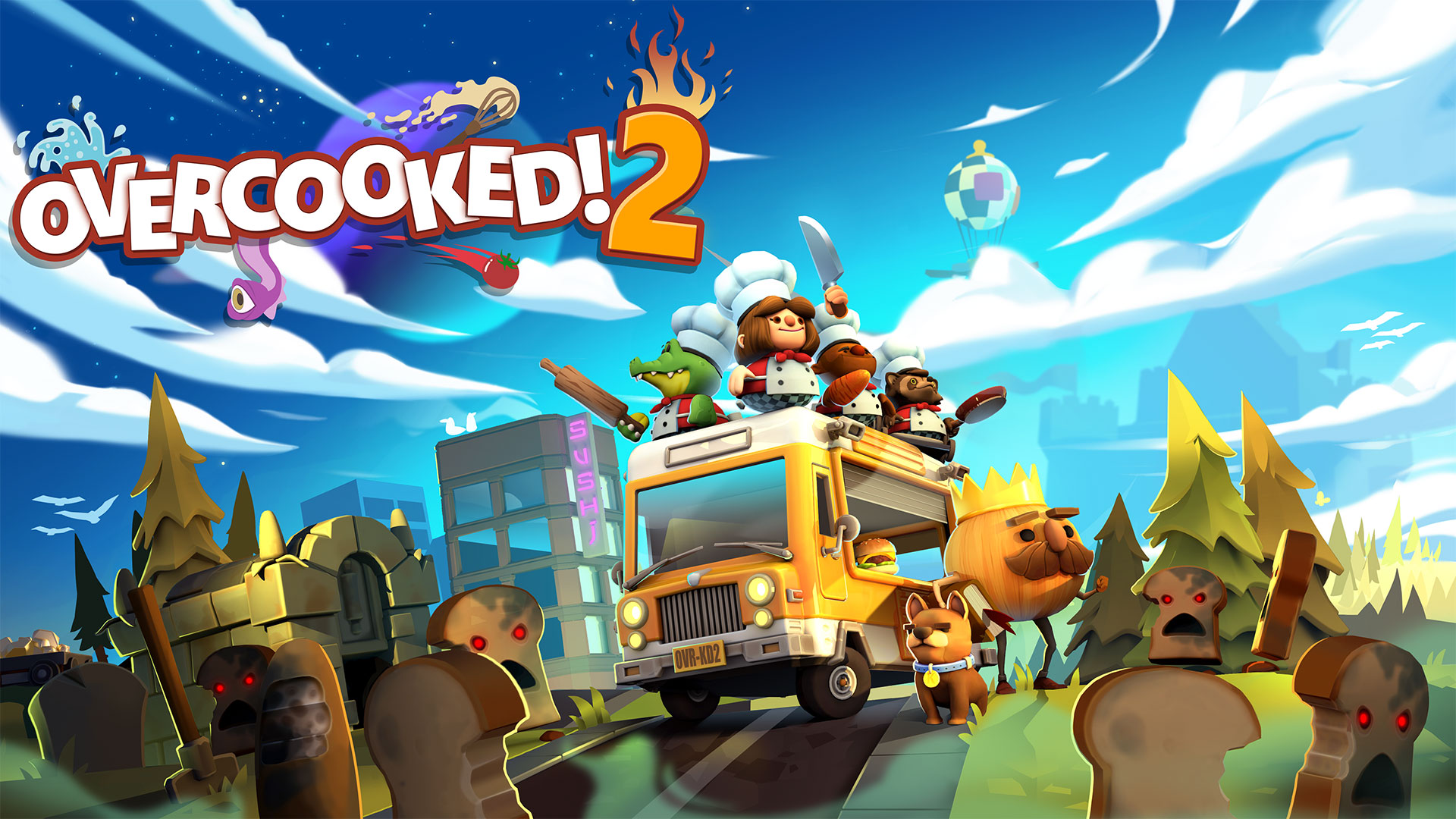
I was invited by some friends to play a video game called “Overcooked 2”. I was not particularly interested at first but right after I started playing the game, I fell in love with it. It was thrilling and the fulfillment from cooperation was high. For those who do not know what it is, in short, it is a fast-paced video game in which 2-4 players are supposed to cooperate to do different tasks and finish as many dishes as possible.* The best strategy for the group is each player focusing on certain task(s).

This game does not only teach us the importance of cooperation, but also some economic concepts. Specialization is crucial for the operation and development of a firm, an organization, a society or even a family. It allows us to be much more productive. One of the reasons is that it saves us time. In Overcooked, if all 4 players do not cooperate and everyone produces a dish by themselves, then everyone would have to walk more in order to go to different sections and do different tasks. More distance walked means more time needed, and more time needed means fewer dishes made, obviously.

「overcooked 2」の画像検索結果
     (Source: Gematsu)


Thursday, August 02, 2018

Japanese Legislator: LGBT People Are Not Productive

画像に含まれている可能性があるもの:1人、クローズアップ

About a week ago, a Japanese legislator wrote an article and said something like "should we actually spend money on LGBT people? They do not give birth to children, which means that they are not productive." After seeing this, many people criticized and protested against this. They were saying things like "do not discriminate!", "humans' value is not determined based on productivity!", "respect human rights!", etc.

All that is not wrong. But why can't people come out and say that...
- productivity is not based on whether someone or a household has children or not. It depends on whether they are producing goods/services, and the quantity and the quality of the goods/services. (Production of Goods and Services = Productivity)
- regular working LGBT+ people are productive and have been paying taxes so they deserve to use public services by the government.
- if giving birth directly means productivity, then we can finally understand why Uganda is so rich. (Although in Japan, having more children will tend to increase future productivity, that is not necessarily the case. Having a child in a household does not necessarily mean the productivity of the country will increase.)
- if you do oppose the idea of using tax money on people who are not productive, you should support the abolition of the "Public Assistance" program, which is a social security program for the poor. You definitely do not have the courage and that would also be unconstitutional.

Many people are just yelling those slogans but do not/cannot make a criticism based on facts and reasoning. That is one thing that disappoints me.

How can legislators be so ignorant? Oh, democracy. I am so forgetful.

Saturday, March 03, 2018

Background Music for News: Is It Toxic for Us?


(Screenshotfrom this video on Youtube)

While we care so much about freedom of press, how much do we actually care about the quality of news? Should we just be satisfied as long as the press has the institutional freedom to publish? Is a lot of the news really fake? If it is actually not fake, how good is it though?

Compared to 5 years ago, traditional mainstream news sources now have much less influence already and many more new ones have been established, mostly online. These sources rely much on social media and Youtube. Just like social media and messengers, young people join as the pioneers in the trend and later the older ones joined it too. Now many people get their news mostly from social media or Youtube. The status of newspapers and TV news have changed a lot. These firms now have acknowledged and accepted the trend and changed their strategies. Now most of the news have come to join the competition. And, the focus has shifted to videos instead of text.

As this trend being created, Background music (BGM) for news is also part of it. In the past, there was no music in the background when you were watching the news on TV or reading newspaper. Now news videos on facebook and youtube come with BGM.

When do we usually hear background music? It is when we watch movies, TV dramas, entertainment videos, etc. Most of time, the purpose of BGM is to stir up emotions. Music plays a vital role in those things. That’s why there are awards given for BGM/tracks for movies/TV dramas. Imagine watching Finding Dory/X-men/The Ring without BGM. If you pick the wrong music, you may ruin the movie/drama.

Now that we understand very well of the effect of BGM, we should ask ourselves: should the news use BGM? What is the news supposed to be? It is supposed to be the objective impartation of social, economic and political issues and incidents in the society. The public is there to receive it and may make a judgement about it. Ideally, news should stay impartial. Members of the public can only rely on the news to be informed. If the news is partial, incorrect or inaccurate information, then the public will make wrong judgements based on it. Judgements lead to decisions. You may decide to go out to protest against a policy or to vote for a politician based on your judgement. This means the news affects or leads to certain decisions, and wrong information leads to wrong decisions.

There are different ways for news media to be partial, e.g.: focusing or not focusing on certain issues (e.g. report less of the bad side and more of the good side of a political party), the choice of language (e.g. illegal immigrants vs undocumented immigrants), showing part of the event but not all, etc. These are not new at all, but the use of BGM is. This is probably a little more subtle and less noticeable than the above.

As we know from the above, most of the time, BGM is used for stirring up emotions. Should the news stir up emotions? If news media use BGM for the news, it becomes a tool to influence how the audience thinks about and emotionally relates to the issue or incident. It can help to shape how we see the news, and leads us to think that the issue/person/event is more concerning, ridiculous, positive or negative, etc. than we thought. This definitely violates the purpose of news, which ideally, should be to allow the public to receive it rationally and objectively.

“Now This” is one of the main online news media that you can see on Youtube and social media. When I thought of this topic, it was the first one that popped up in my head. This one is an example of how they inappropriately used BGM for news.(1) Aside from the visual effects, it used music that makes us feel warm, joyful and cheerful, but news is not supposed to influence you emotionally. I cannot guarantee you that the creator likes Obama’s speech, but the effect of the music is definitely to persuade us that Obama’s speech was a great one and we should enjoy it and celebrate it.

Another example from the same network is this one.(2) If you simply close your eyes and listen to the music, you would think you are watching a comedy. Perhaps something like Mr. Bean or Sex and the City. But you are not. You are watching a news video, about President Trump. The music had the effect of depicting the silliness or the clumsiness of the President.

You may want to ask, “What is your problem with that speech? It is a great one! And Donald Trump was really acting silly too.” The problem is, it is not the news media’s role to tell us what we should feel and think. It is supposed to be our own judgement to make. We should be the ones to decide what is right or wrong, good or bad, who is silly, who is great, etc., not them.

BGM for the news is not always unacceptable. Sometimes the music is very moderate and it does not bring too much extra effect to the news. But perhaps discouraging the use of BGM in general is safer for us. Why do we need it to be packaged like that, anyway?

This phenomenon actually tells us how much we like to be fed with news that is packaged as a kind of irregular entertainment. We have an obsession with entertainment that we do not know. The supply of this type of low quality news is the product of our demand.

News is not entertainment. As members of the public, we have to learn to appreciate the plainness of the news. News media should avoid using background music that can subtly influence the audience. Music is great, but not when it is used for the news.

Friday, January 05, 2018

No Ala Carte


In the U.S., it seems like the society expects everyone to choose one side (left or right) and that determines your position on all social and political issues. And the existence of two parties (minor parties can be ignored) allows very little diversity.

But the society is much more diverse. Individuals want to choose what to support or oppose based on their values, which derive from their family, community, the schools they went to, their religion, personal encounters with others, etc. And we (should) also use reasoning to make a good judgement.

The society, meaning the individuals, should change its expectations of how people choose a position. That allows us to: 1) think more freely from the pressure and unrealistic expectations by the society 2) understand better how and what the others think.