(source: the Guardian)
It is a quite common belief that GDP (or GNP) predicts or estimates how happy we are or how good our life is. But it is an illusion. GDP stands for "Gross Domestic Product", and GNP stands for "Gross National Product". They are indexes that indicate the total value of all final goods produced within an economy over a period of time (by all producers within the economy and by all nationals/residents over the world respectively). This does not only indicate the value of all products, but also the expenditure and total income of the economy.
Money can definitely buy some happiness. When you are in poverty, struggling for food, and I give you US$1,000, you will definitely be very happy. But it should not surprise anyone that there are types of happiness that money cannot buy, and having nothing but only money (which can buy you material goods and services) cannot make someone feel very happy. We are a social animal. (I hope you are not surprised by the fact that we are an animal.) It is our nature that we need to have social connections and relationships. We want people to care about us and we want to care about other people. We want to be respected. We want to be able to apply our skills and talents somewhere, typically our career. We want to be healthy. We have the desire to live in a society that is fair, safe and free. Money cannot buy you these things (except health, because having money does allow to have access to high-quality healthcare).
Nevertheless, personal income does play a role in our individual happiness (or well-being). But how about national income? How does it tell us whether we, as a society, are happy? The following graph estimates the GDP from 1929 to 2013:

(source: Economic Consequences of War on the U.S. Economy)
There was a significant increase in GDP throughout the period between 1939 and 1945, which is the time of World War II. This is due to the production of weaponry (and the required inputs for that). We definitely would not say this growth in GDP or this war was a good thing, although it directly and indirectly led to some innovation and technological advancement, such as the creation of satellites and internet. But tens of millions of people died.
There are many things that we produce that are not good for our well-being, and those things are calculated into GDP. Tobacco, sugary soft drinks and snacks that lead to obesity, weapons, etc. The more we produce these things, the higher the GDP is.
In the past three decades, more and more economists have come to study happiness. How do we measure happiness? How should we allocate our resources to increase happiness, on the individual level and the macro level? What policies should the government make? This field, Happiness Economics, attempts to bring new insights to the field and challenge mainstream Economics, which tends to make simple assumptions about happiness (or utility).
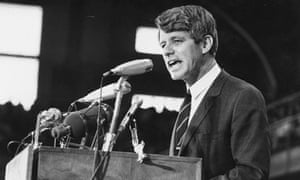
However, way before the creation of this field, an American politician was already aware of the toxic idea that GDP is a good indicator of our happiness/well-being. Bobby Kennedy, the brother of John F. Kennedy, gave a speech at the University of Kansas. In a small part of the speech, he attempted to draw awareness of the misinterpretation of GDP. He said:
"Too much and for too long, we seemed to have surrendered personal excellence and community values in the mere accumulation of material things. Our Gross National Product, now, is over $800 billion dollars a year, but that Gross National Product - if we judge the United States of America by that - that Gross National Product counts air pollution and cigarette advertising, and ambulances to clear our highways of carnage.GDP is very useful in illustrating the economic performance of an economy. But we should not be confused with the role of it: it does not tell us how happy we are or how good our life is. Producing more or having higher purchasing power does not mean more happiness.
It counts special locks for our doors and the jails for the people who break them. It counts the destruction of the redwood and the loss of our natural wonder in chaotic sprawl.
It counts napalm and counts nuclear warheads and armored cars for the police to fight the riots in our cities. It counts Whitman's rifle and Speck's knife, and the television programs which glorify violence in order to sell toys to our children.
Yet the gross national product does not allow for the health of our children, the quality of their education or the joy of their play. It does not include the beauty of our poetry or the strength of our marriages, the intelligence of our public debate or the integrity of our public officials.
It measures neither our wit nor our courage, neither our wisdom nor our learning, neither our compassion nor our devotion to our country, it measures everything in short, except that which makes life worthwhile."
(edited on Oct 11, 2018)

No comments:
Post a Comment